PLM/Forma Integrations & Digital Thread
Manufacturing businesses are under constant pressure to move faster, reduce errors, and stay competitive. Yet many are still relying on disconnected systems, spreadsheets, and manual processes to manage their product data and workflows.
That approach might have worked a decade ago. Today, it's the thing quietly costing you time, money, and opportunities you don't even know you're losing.
Product Lifecycle Management (PLM) software like Autodesk Fusion Manage isn't about adopting a new system. It's about getting your evenings back, shipping with confidence, and finally having a business that scales without the chaos.
The Real Cost of "Good Enough" Systems
Spreadsheets, shared folders, and email approvals feel free. They're familiar. And for a while, they work.
But the cracks tend to show up right when you need things to run smoothly: when you're growing, adding complexity, or trying to move faster. And the cost isn't always visible on a balance sheet.
It shows up as the engineer who spends Friday afternoon tracking down the "right" version of a file. The change request that falls through the cracks because someone missed an email. The batch of parts that gets manufactured to an outdated spec because nobody caught the discrepancy in time.
These aren't just frustrating moments. They're expensive ones. Rework, delays, customer complaints, missed deadlines, and the quiet erosion of your team's confidence in the process.
The real cost of "good enough" isn't what you're paying for it. It's what you're losing because of it.
What PLM Software Actually Does for
Your Business
Imagine your engineering team starting the day knowing exactly where every product stands. No chasing, no guessing, no duplicate files. Changes move through the right approvals automatically, with a full record of who decided what and when. Your manufacturing floor builds from current, accurate information every time.
That's not a vision for some future version of your business. It's what happens when your product data management stops being a patchwork of tools and becomes a single, reliable environment.
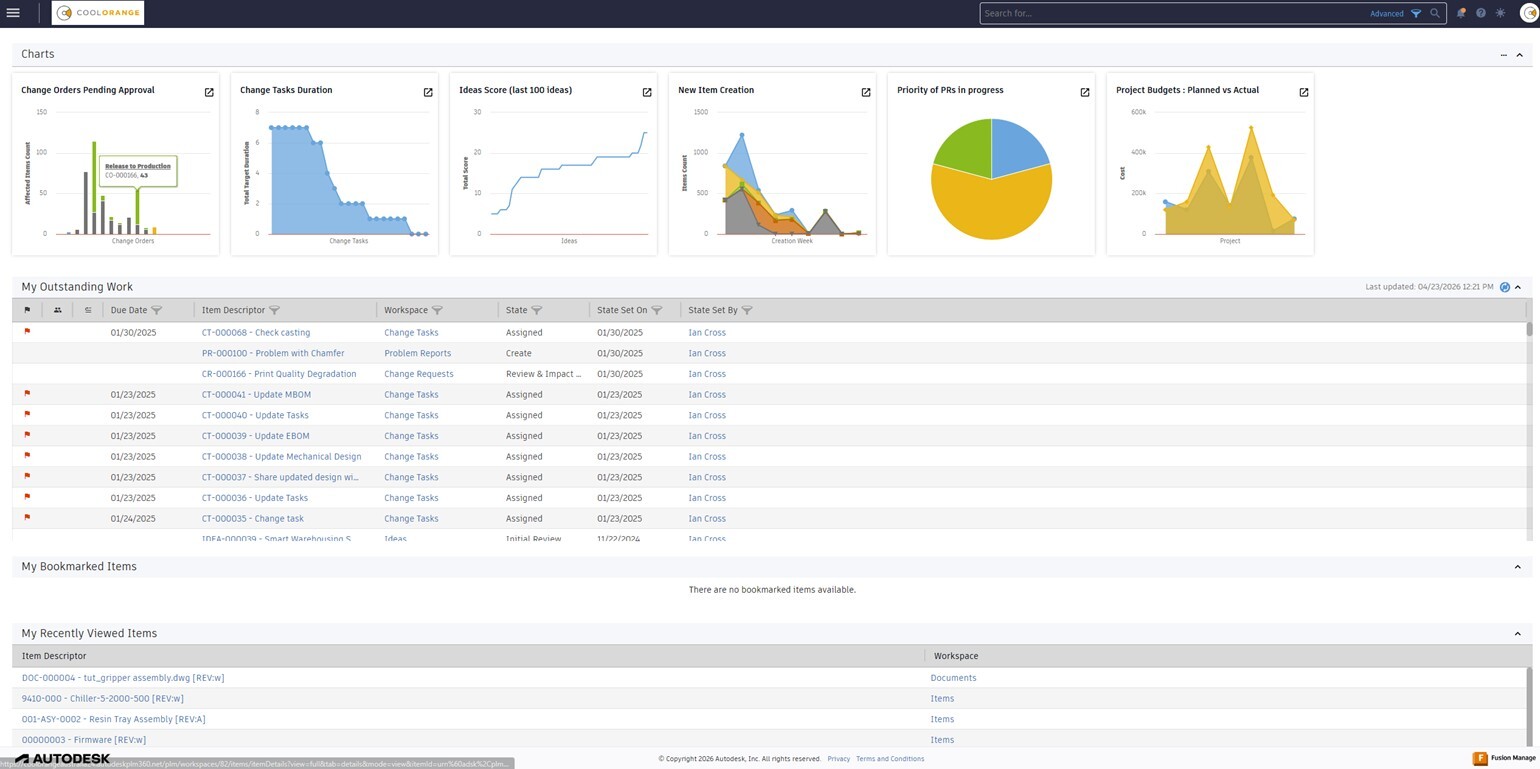
With a unified PLM software platform:
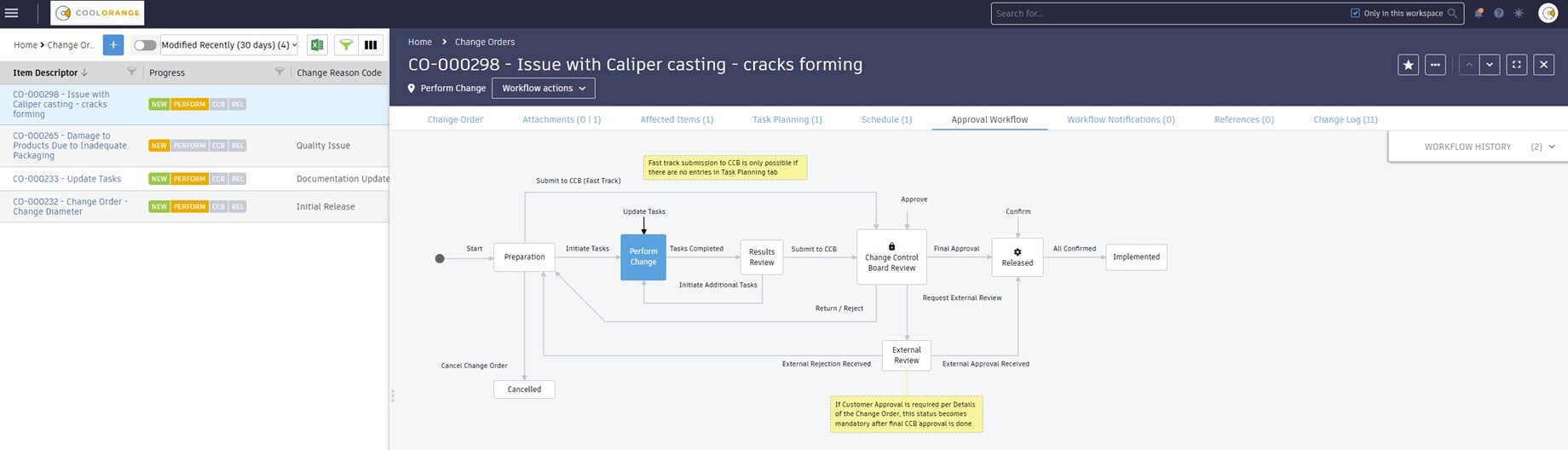
- Engineering change management happens faster and lands correctly. Approvals are automated and traceable, so nothing depends on someone remembering to forward an email.
- Your teams stay aligned without extra meetings. Engineering, operations, and leadership all work from the same information, so decisions get made on facts, not assumptions.
- You can answer "where are we on this?" in seconds, not hours. The status of any change, item, or process is visible in real time.
- Your systems reinforce each other instead of conflicting. With connections to Autodesk Vault, ERP, and other tools, the same data flows cleanly across your business.
The shift isn't just operational. It changes the way your team feels about their work. Less firefighting, more forward momentum.
Cloud PLM: Start Small, See Results Fast
One of the biggest reasons manufacturers delay PLM implementation is the assumption that it requires a massive, disruptive, multi-year rollout. That used to be true. It isn't anymore.
With Fusion Manage, a cloud PLM platform built for the way manufacturing businesses actually work, you can start with a single process such as engineering change management, item management, or bill of materials (BOM) control and get real value within weeks. There's no pressure to boil the ocean. You pick the area causing the most pain, fix it, and build from there.
This matters for a few reasons:
- You see results quickly, which builds confidence and momentum across the business
- Your team adopts the system gradually, in the context of real work
- You're never locked into a scope that no longer fits as your business evolves
- Each new process you bring in compounds the value of everything already in place
Most companies begin by standardising their engineering change management process, bringing item and BOM data into a controlled environment, and connecting PLM software to Autodesk Vault so CAD data flows cleanly into downstream workflows. Once those foundations are delivering results, which typically happens within the first few months, expanding into supplier management, quality workflows, and deeper ERP integration becomes a natural next step.
The ROI of PLM Software:
When It Pays for Itself
PLM software isn't just a process improvement. It's a financial decision that tends to pay back quickly.
Consider this: if a single mechanical engineer recovers just 25 hours over the course of a year, time that would otherwise be lost to searching for data, re-entering information across systems, or managing rework from a missed engineering change, the licence cost is essentially covered. In most environments, those 25 hours come back within the first few months, not the full year.
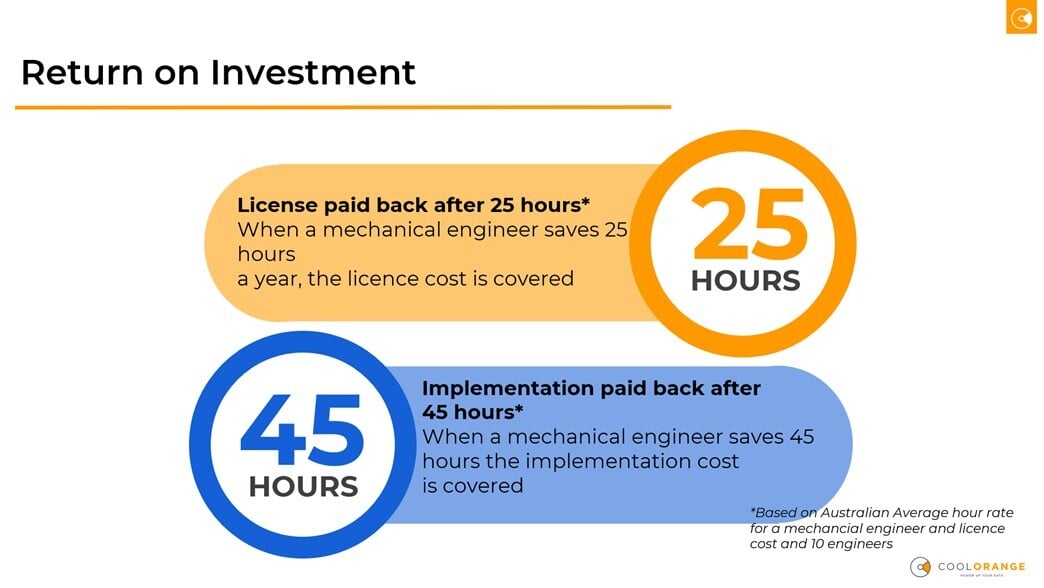
PLM implementation follows the same logic. When a mechanical engineer saves 45 hours through cleaner change management, accurate bill of materials data, and fewer errors flowing into production, the implementation investment is repaid. Everything beyond that becomes pure return: more engineering capacity, faster project delivery, less overtime, less scrap. And there is typically a lot beyond that.
Multiply that across your team and manufacturing PLM stops looking like an IT expense. It starts looking like one of the highest-return investments you can make in your operation.
The Shift That Changes Everything
When manufacturers move from disconnected, manual systems to a unified PLM software environment, the impact tends to be felt immediately. Not in abstract metrics, but in how the day actually feels.
Engineers stop spending time on administration and start spending it on engineering. Managers stop chasing status updates and start making decisions. Teams stop working around the process and start trusting it.
That's the real outcome. Not a new platform, but a business that runs with more clarity, more control, and more confidence at whatever scale you're operating today, and wherever you're headed next.
Where to Start with Manufacturing PLM
You don't need to transform everything at once. The manufacturers who get the most from PLM software start with a clear, focused scope, build confidence in the process, and expand when they're ready.
Pick the process that's causing the most friction right now. It might be engineering change management, BOM control, or simply getting your CAD data to flow cleanly into the rest of the business. Start there, get it working, and let the results make the case for what comes next.
The companies that wait for the perfect moment, the full budget, or the complete business case rarely get started. The ones that pick a starting point and move do. And more often than not, they look back six months later wondering why they waited as long as they did.

.jpg)